

DAKAR FASHION WEEK
Where Fashion Met the Tide: Dakar Fashion Week 2025 and the Pirogue Runway on the Atlantic
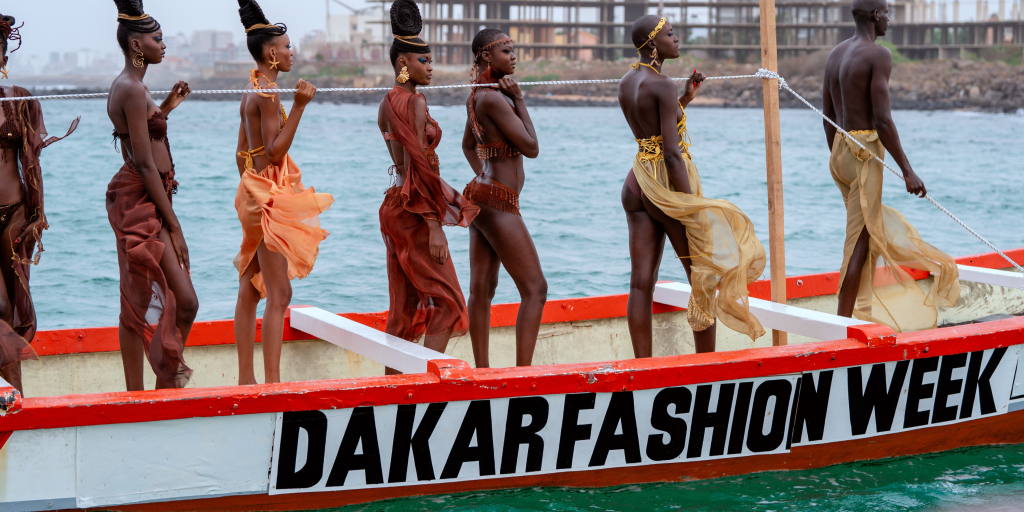
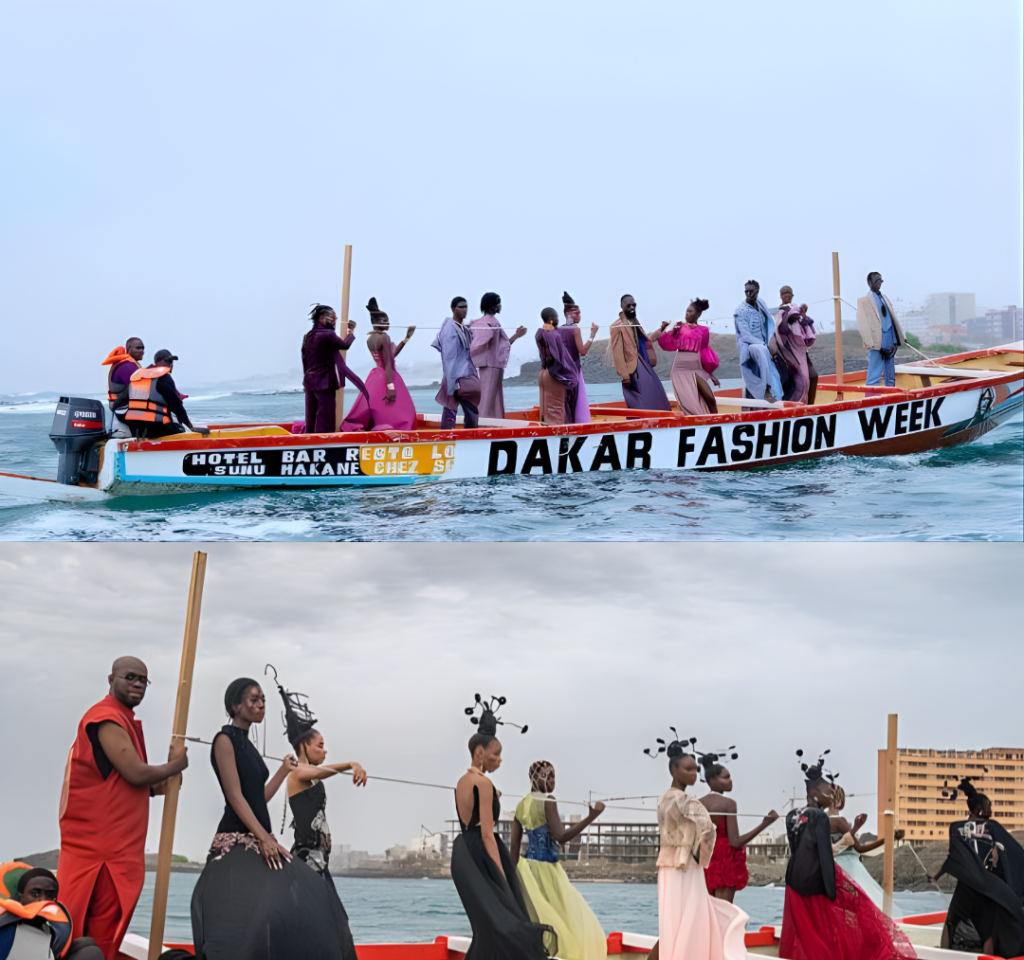
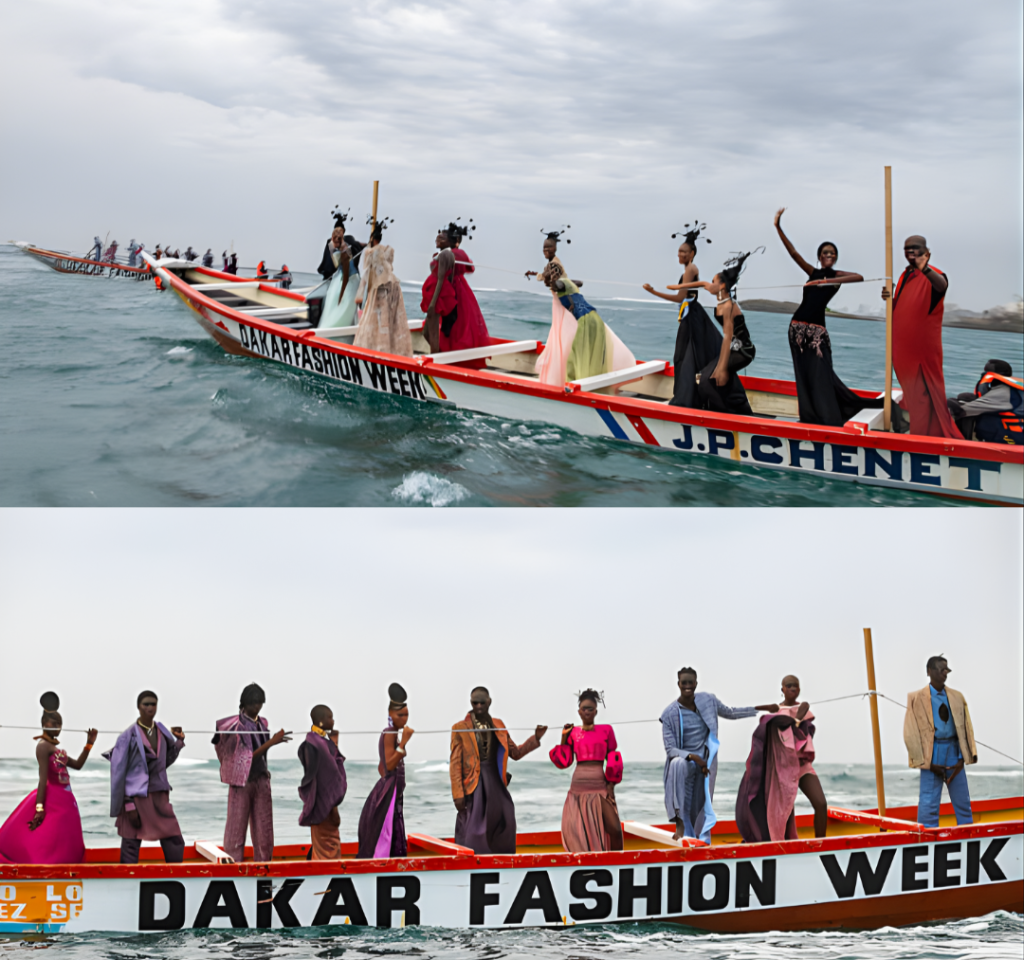
Dakar Fashion Week 2025 unfolded like a story written by wind and water. While fashion weeks across the world often rely on concrete venues, controlled lighting, and predictable runways, Dakar chose something far more alive. This year’s closing showcase abandoned the land entirely, turning the Atlantic Ocean into a moving stage and transforming traditional fishing pirogues into vessels of couture.
The result was not just a fashion show, but an experience. One that blurred the boundaries between heritage and innovation, between performance and reality, between nature and design
A Runway That Floated
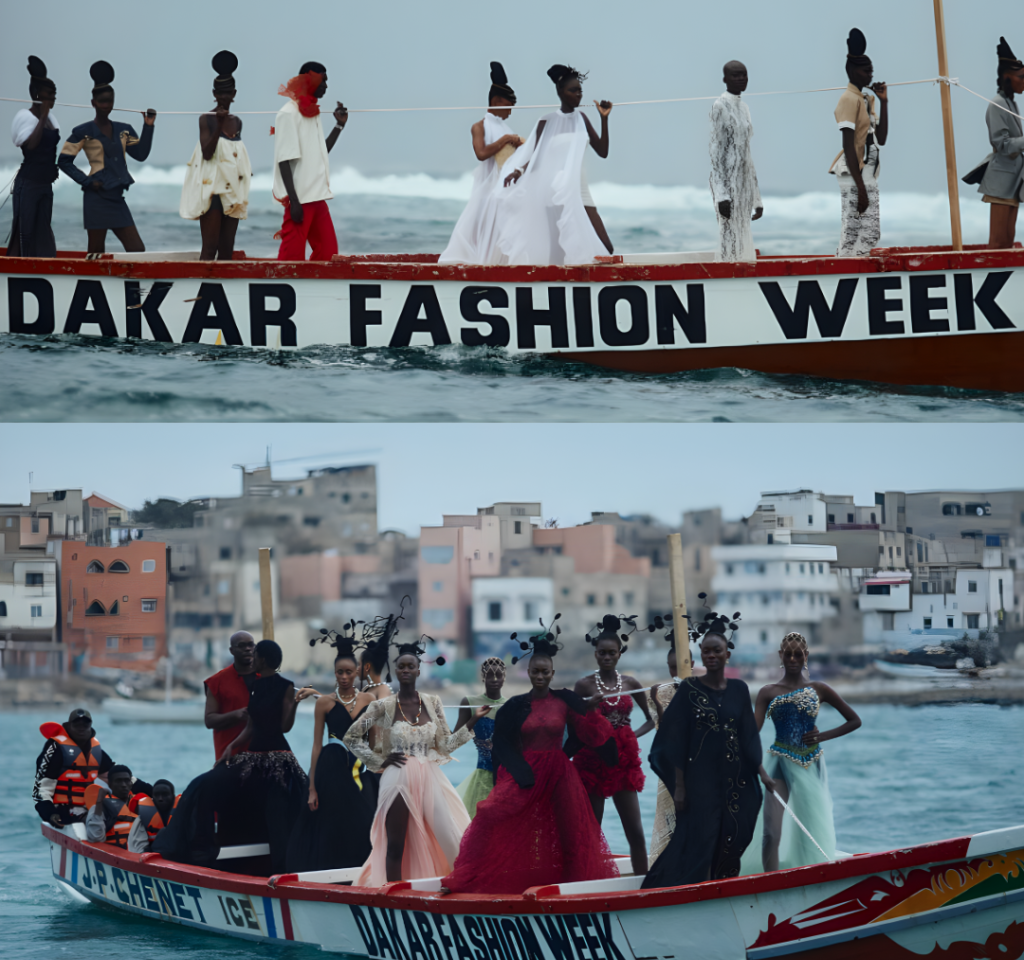
As the sun hovered above the horizon near Ngor Island, a procession of brightly painted wooden pirogues drifted across the water. Each boat carried models poised with quiet confidence, balancing artistry and strength as waves gently rocked beneath them. Guests watched from nearby boats, the ocean itself determining the rhythm of the show. There were no straight lines or rigid timing. Instead, the tide dictated pace, and the breeze animated every silhouette.
The Atlantic was not merely a backdrop. It became a collaborator. Fabrics lifted and twisted with the wind, hems brushed the air, and reflections of colour shimmered across the water’s surface. In that moment, fashion was not separated from its environment. It existed inside it.
The Cultural Power of the Pirogue
The choice of the pirogue runway was deeply symbolic. Along Senegal’s coast, pirogues are inseparable from daily life. They are tools of survival, symbols of community, and carriers of generational knowledge. Painted in vibrant colours and often adorned with names or prayers, these boats tell stories of labour, faith, and resilience.
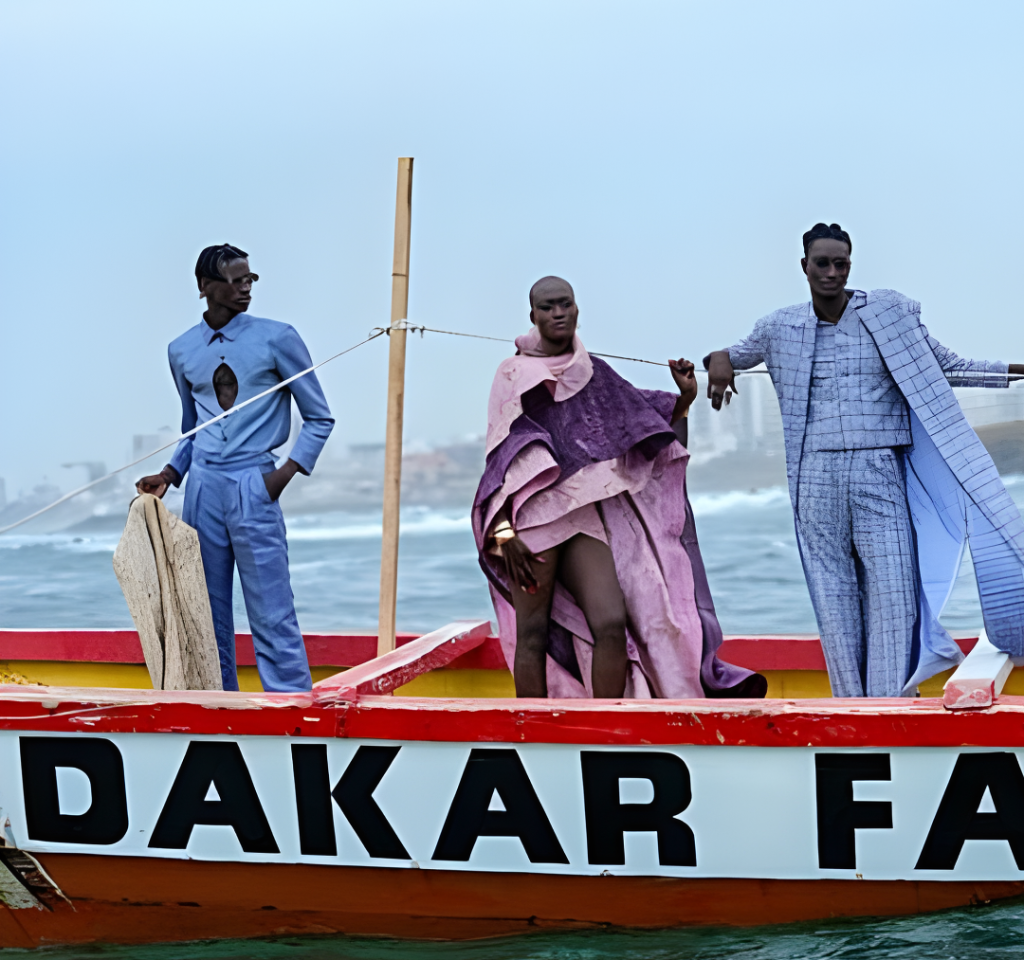
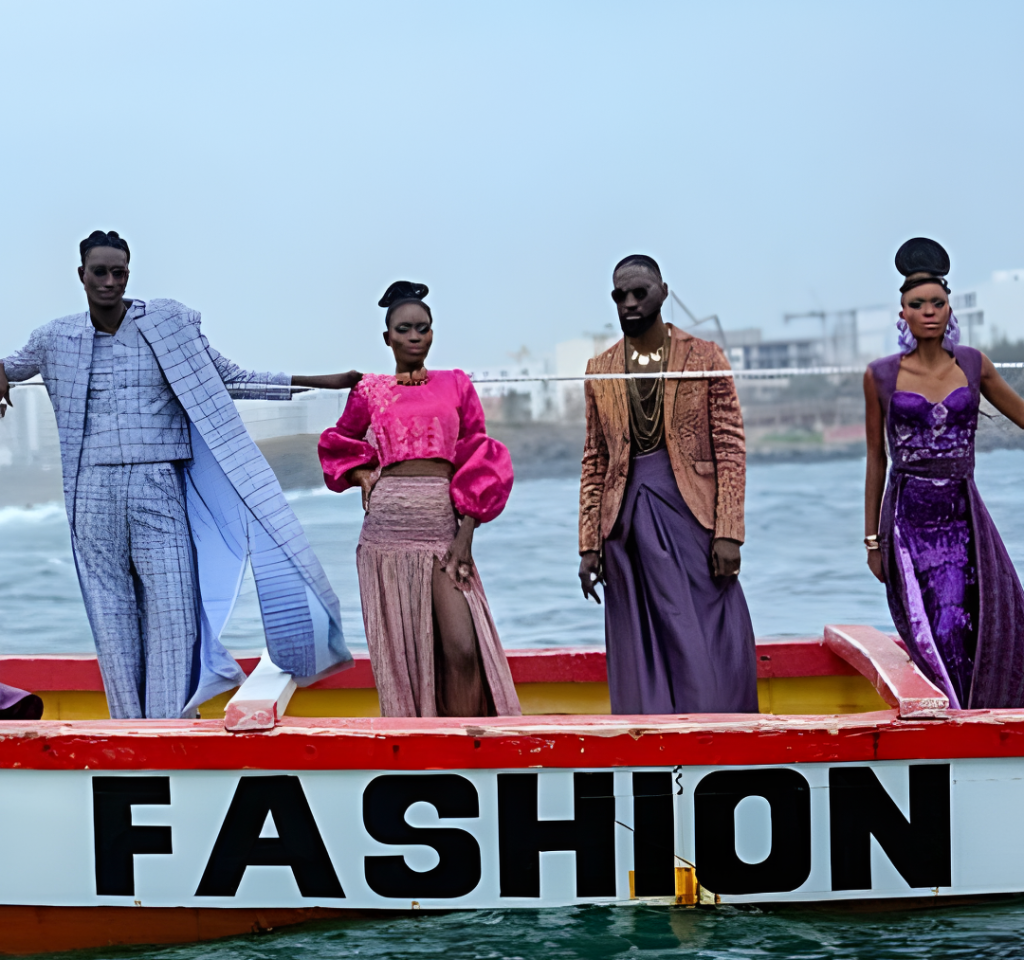
By placing high fashion on pirogues, Dakar Fashion Week elevated an everyday object into a cultural statement. The message was subtle but powerful: luxury does not need to abandon tradition to feel modern. Instead, tradition can become its foundation.
This merging of couture with cultural identity is what sets Dakar Fashion Week apart from many global counterparts. The show did not extract beauty from its surroundings; it honoured them.
Donec scelerisque enim non dictum aliquet. Sed ec nunc. Suspendisse volutpat elit nec nisi congue tristique eu at velit. Curabitur pharetra ex non ullamcorper condimentum. Morbi sit amet dui convallis, mattis augue id, ullamcorper massa. Fusce vulputate sodales hendrerit.
Designers in Dialogue With the Sea
The collections presented during the pirogue runway felt intentionally attuned to the setting. Designers from Senegal and across the African continent showcased work that echoed movement, texture, and history.
Flowing silhouettes dominated, allowing garments to respond organically to the wind. Natural fibres, layered textiles, and handcrafted details created depth and tactility. Raffia, beadwork, shells, embroidery, and woven elements appeared throughout the collections, grounding contemporary designs in ancestral techniques.
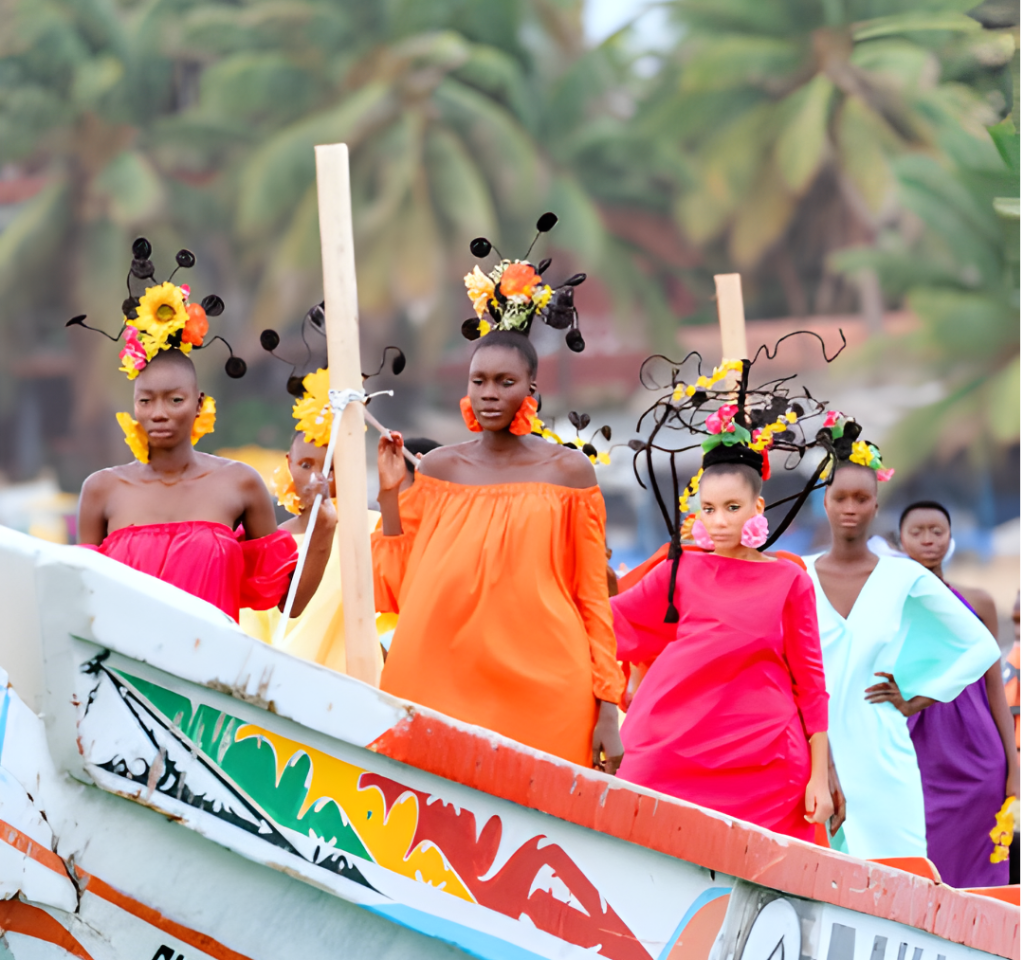
Some designers leaned into soft, ocean-inspired palettes with sandy neutrals, blues, and whites, while others opted for bold colours that mirrored the vivid paintwork of the boats themselves. Oranges, reds, purples, and greens burst against the water, transforming the Atlantic into a living canvas.
Menswear and womenswear alike played with structure and fluidity. Tailored pieces softened by drape, oversized forms balanced by bare feet, and architectural garments contrasted with the rawness of the sea. Every look felt intentional, as though designed not only to be seen, but to be experienced in motion.
Adama Paris and a Vision Beyond the Runway
At the heart of Dakar Fashion Week is Adama Paris, whose vision continues to push African fashion into new territory. Since founding the event in 2002, she has championed designers from across the continent, creating a platform rooted in African narratives rather than Western expectations.
The pirogue runway was a culmination of that philosophy. It was bold, unapologetic, and deeply local, yet globally resonant. Rather than replicating the structures of Paris, Milan, or New York, Dakar once again proved that African fashion does not need validation through imitation. It defines its own rules.
Adama Paris’s own designs reflected this ethos, blending sensuality, strength, and colour in ways that celebrated the body without overshadowing the environment. Barefoot models, floral adornments, and saturated hues reinforced a connection to land, sea, and self.
Fashion as Experience, Not Spectacle
What made this show remarkable was not just its visual impact, but its emotional weight. Watching models glide across the ocean invited reflection. Fashion here was not fast, not disposable, not distant. It was human. It was vulnerable to the elements. It existed in real time, shaped by forces no one could fully control.
In an industry often criticised for excess and detachment, the pirogue runway offered a different narrative. One where fashion acknowledges place, respects history, and collaborates with nature instead of overpowering it.
There was also an undeniable sense of community. Designers, models, organisers, and spectators shared the same space, floating together on the Atlantic. No grand barricades. No elevated stages. Just water, boats, and shared attention.
Redefining the Global Fashion Conversation
Images from Dakar Fashion Week 2025 quickly travelled across the world, captivating audiences far beyond Senegal. The pirogue runway stood out precisely because it did not try to compete with traditional fashion capitals on their terms. Instead, it introduced a new visual language.
This moment reinforced Dakar’s position not as a peripheral fashion destination, but as a cultural leader. One willing to take risks, to centre African identity, and to remind the global industry that innovation does not always come from technology or scale. Sometimes it comes from listening to the land, the sea, and the stories already present.
A Closing That Lingers
As the final boats drifted back toward shore and the sun dipped lower, Dakar Fashion Week 2025 concluded with an image that will be remembered for years: fashion floating, breathing, and alive on the Atlantic Ocean.
It was not just a finale. It was a statement.
A reminder that fashion can honour its roots while charting new waters. That beauty can be practical, poetic, and political all at once. And that sometimes, the most powerful runway is the one that moves with the tide.